
One Year Researching Microrobots
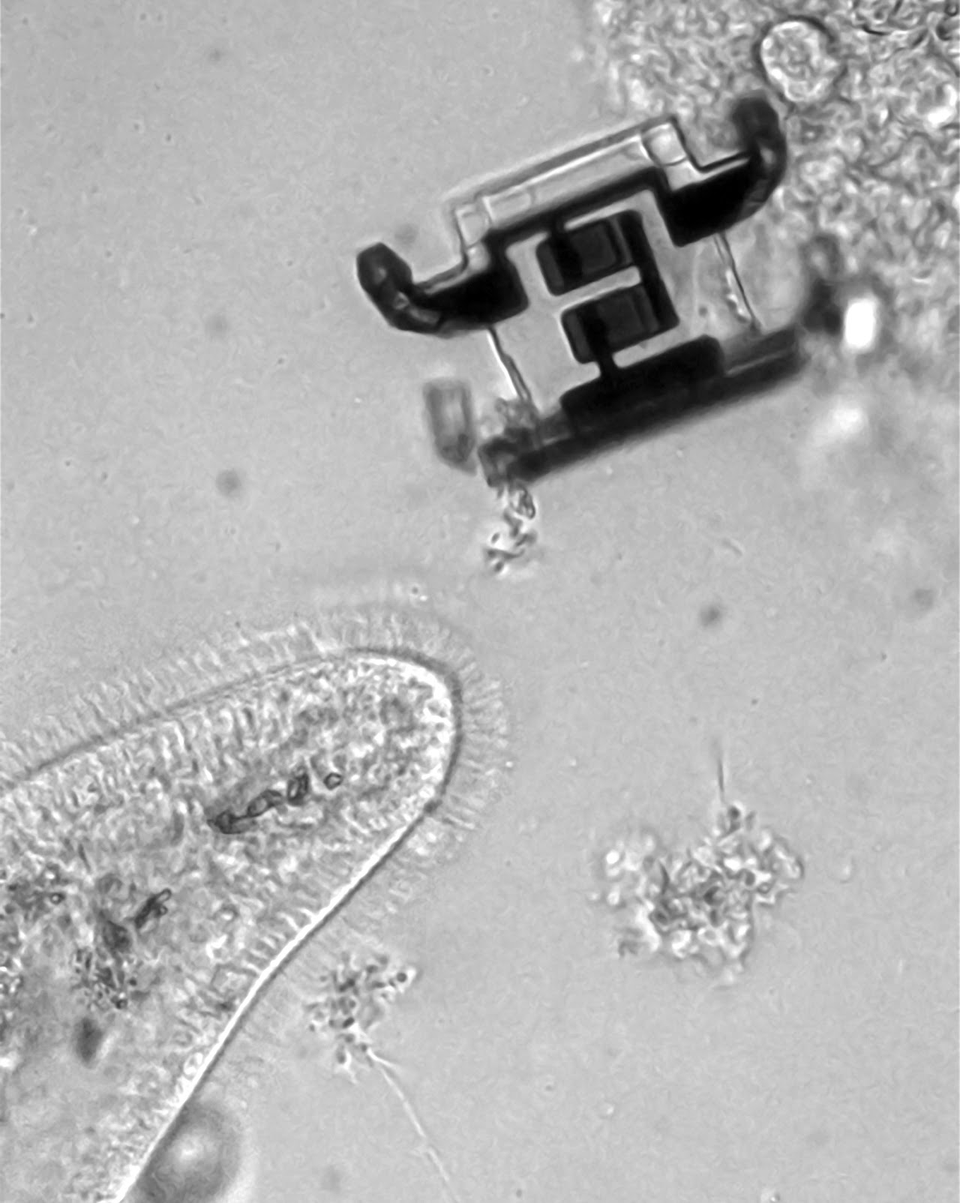
The Miskin lab was a big part of my first two semesters and my freshman year summer at Penn. The lab works on robots 1/2 of the width of a human hair, at a level where the physics governing larger robots break down.
Coming to Penn, I majored in Physics due to an interest in a strong theoretical and first-principles background. The lab had novel applications of weird phenomena not yet exploited in established engineering fields (Van der Waals forces, etc.).
I had a lot of incredible mentorship from my super cool PhD mentor, Lucas Hanson, and our PI, Professor Marc Miskin!
Working with Unknown Unknowns
The part of the research I learned the most about was understanding how to work with unknown unknowns. I can have a technical understanding of something (e.g., a robot can walk due to magnetic fields), but in reality, the application can be much more complex. In the Miskin lab, the mechanism that causes the robot to walk also causes it to grow aluminum on itself. Introducing two independent variables made the experiment more complex.
Over longer time horizons, the robots also emitted an unknown purple fluid, an additional variable that caused ripples that messed with the data. Smaller unknown unknowns seemed trivial to me at first, but quickly became more significant as I found that a single misaligned component on the microscope's axis could cause significant parts of the final image to be completely misaligned.
Solvency with Physics
A physics background was helpful to work with unknown unknowns. Each relationship required an understanding of the fundamental relationships between them. Here, I was grateful to be pursuing a physics undergraduate degree, as it’s common to note that two variables are related without going into the specifics of unrelated noise at very low or very high levels. For example, in physics labs, we have noticed that the luminosity of an LED scales linearly with current; some current is required while the LED is off, which is more about semiconductor physics, heat, and human perception than about light. With a physics background, it was much easier to navigate experiment design in the lab.
Solvency with Experience
A skill I realized was important in research was to have a good instinct for where something was likely to go. For example, in designing an experiment, if we felt a robot was likely to grow metal in one solution but not the other, we were more likely to choose the solution with no potential to grow metal. To make that decision many times within a single experiment, we had to have a very wide range of knowledge about variables and what was likely to happen.
It's much easier to identify subtle traits of the material like that over longer periods of focus in the lab, since I had more time between experiments to dwell, rewatch experiment recordings, and notice more granular events.
Scrappy Building
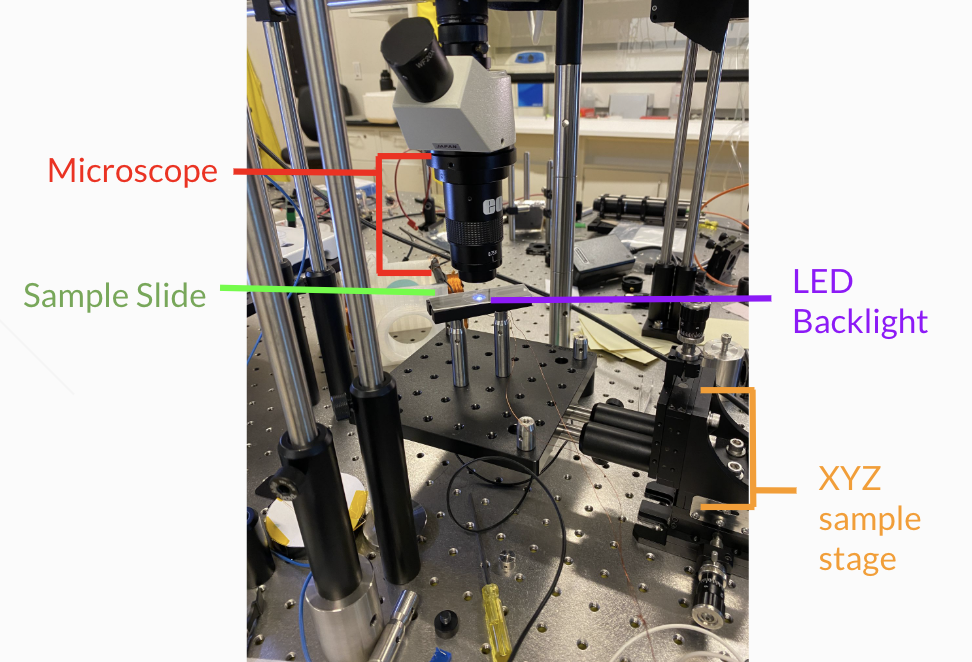
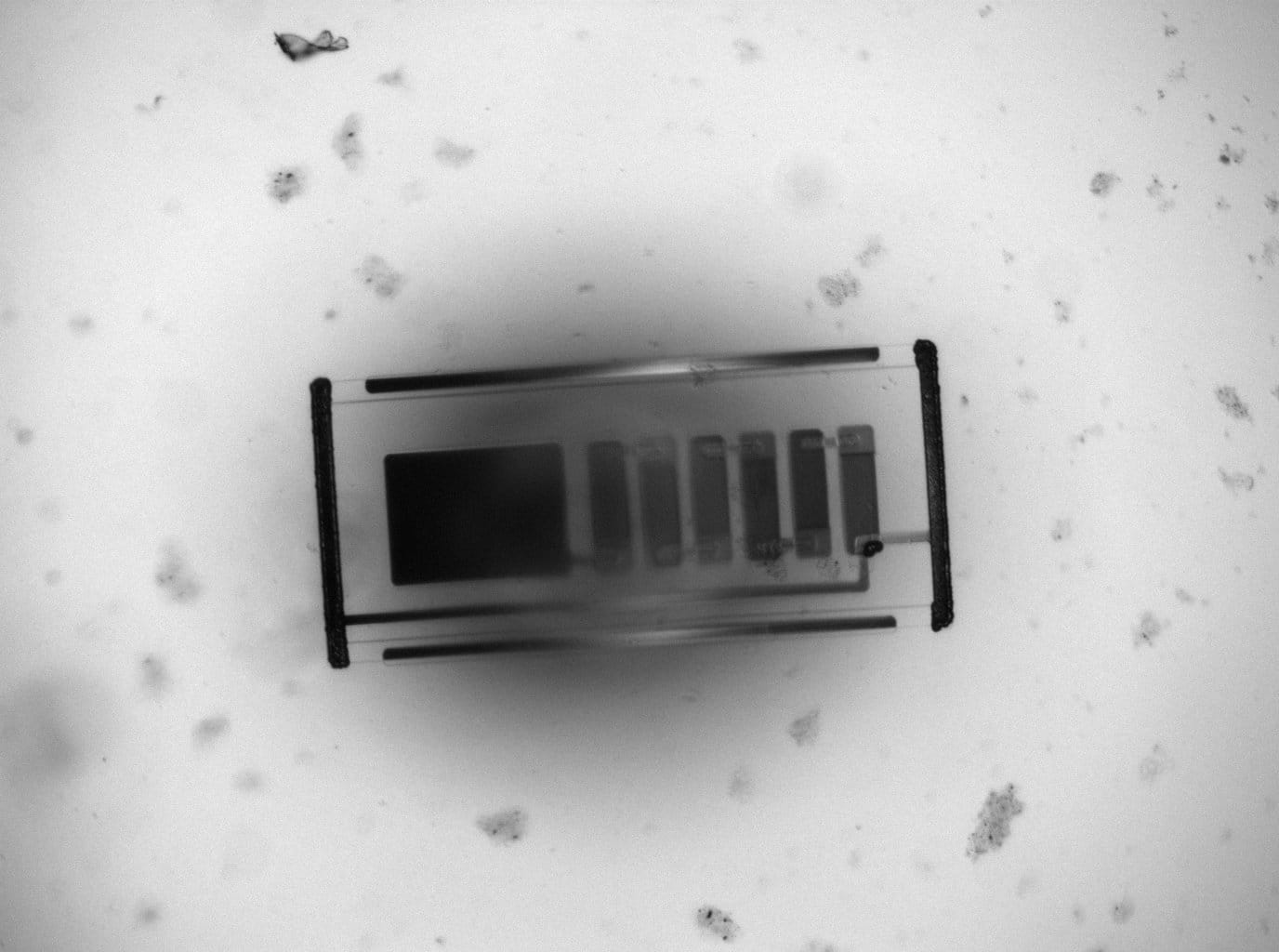
In the above image, you can see that the LED backlight is literally a simple semisphere-headed circuit board LED jammed into the middle of a component for something else, soldered with two copper wires that were alligator-clipped to an outlet, with a glass slide sat on top. This, again, required quite a bit of first principles understanding of backlit microscopes and optics, which I enjoyed.
We built some more complex things, too! The following is a 3D Helmholtz coil we fit around the LED setup, and a macro-level imaging setup using the same backlight concept as the microscope.
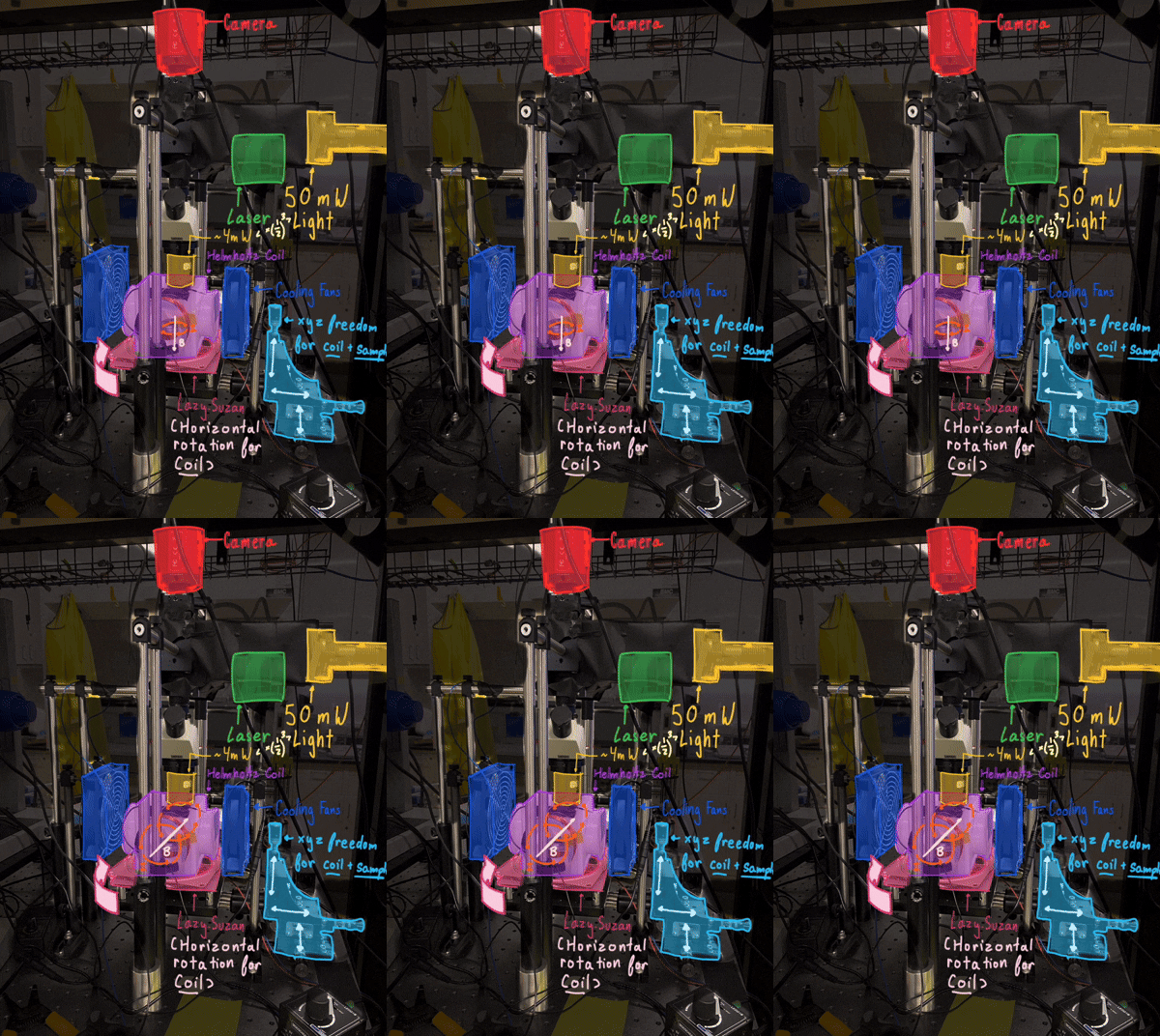
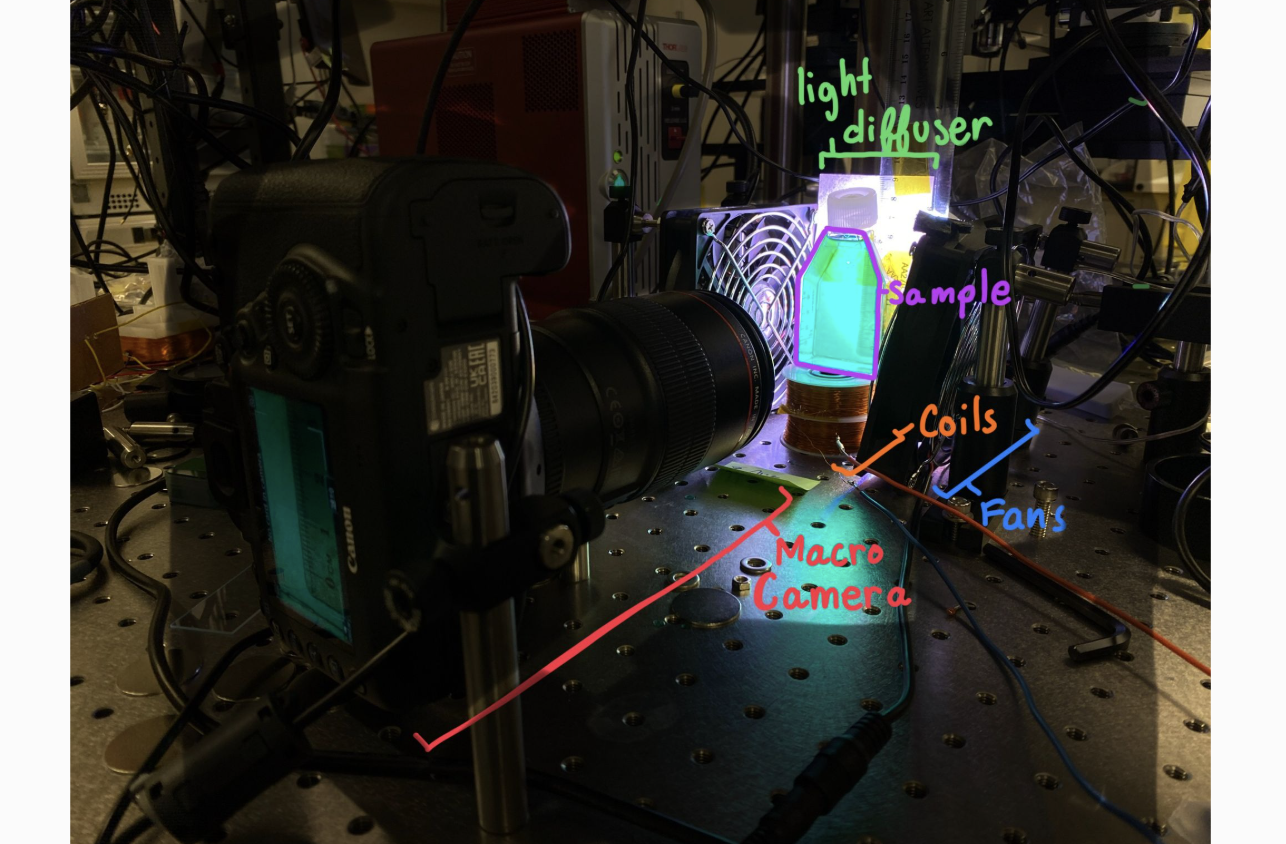
Imaging setups for housing a 3d Helmholtz Coil (left) and vertical motion (right)
Prove the Mechanism Existence before Anything Else
One mental model I keep coming back to from my time in the Miskin Lab is that when working in a hazy system, the first step isn’t optimization, it’s existence. A lot of the uncertainty isn’t in the parameters, it’s in whether the mechanism even works at all. Instead of trying to fully understand or refine something upfront, I tried to collapse the unknown unknowns by forcing a simple proof: can this thing happen, even once, under controlled conditions?
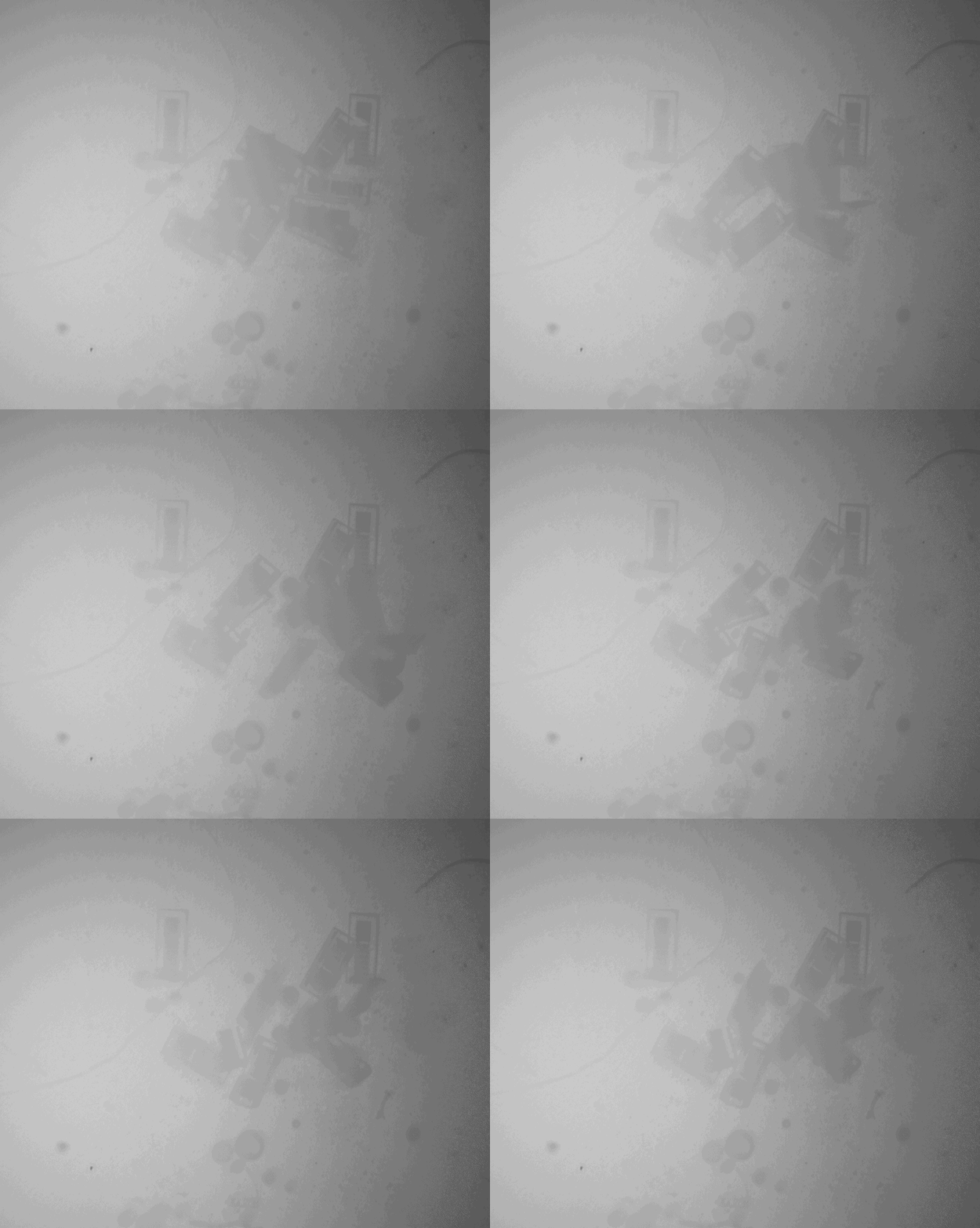
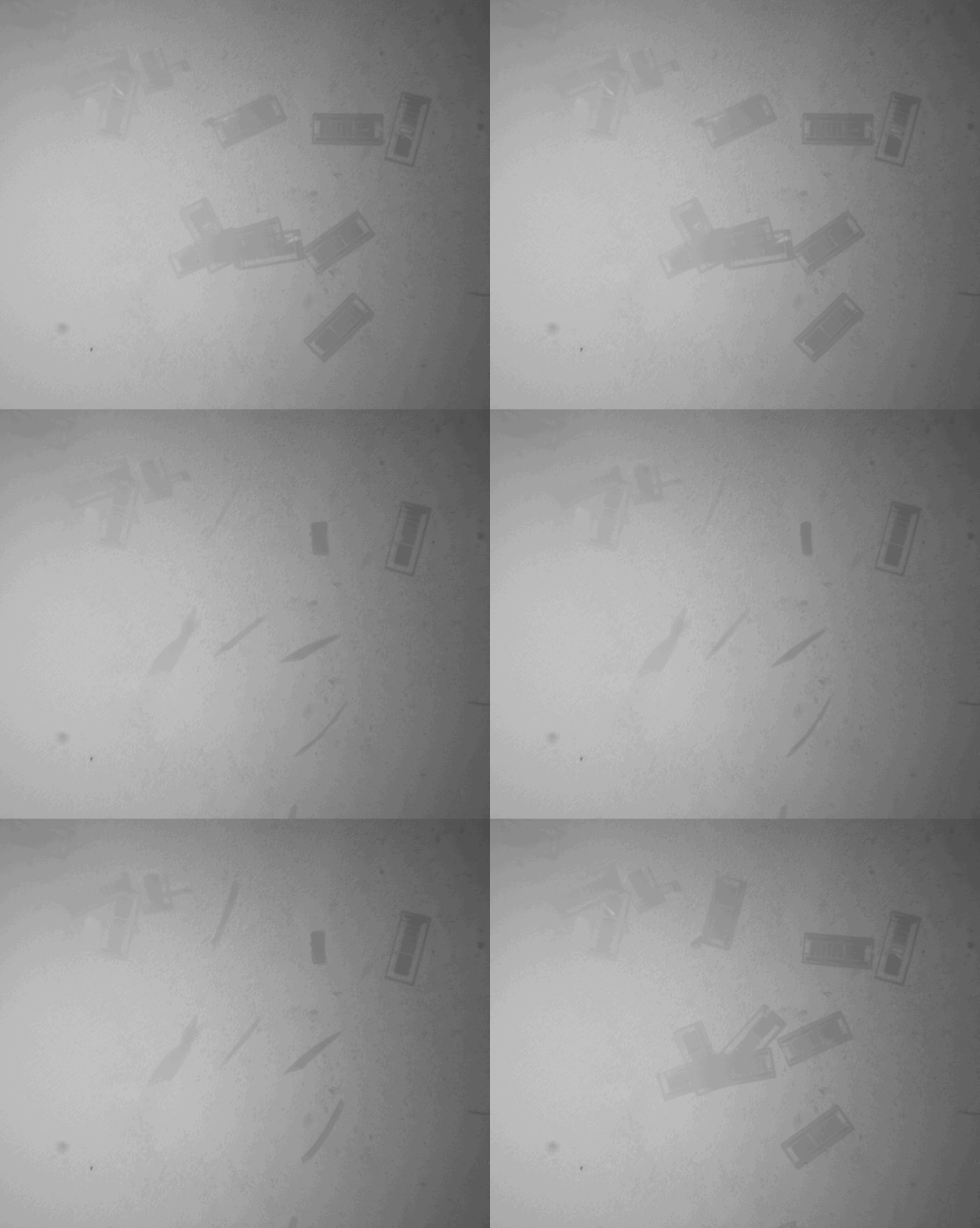
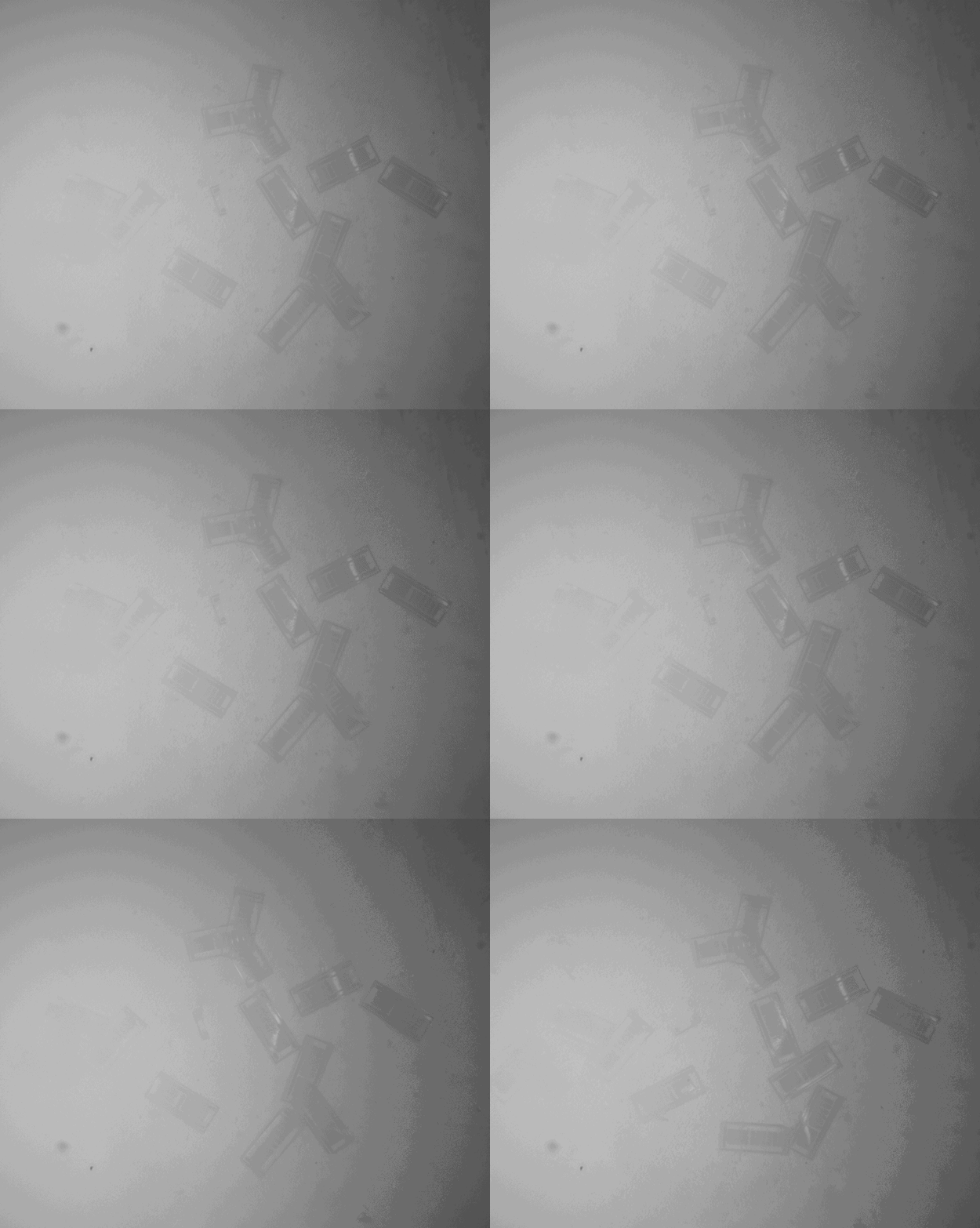
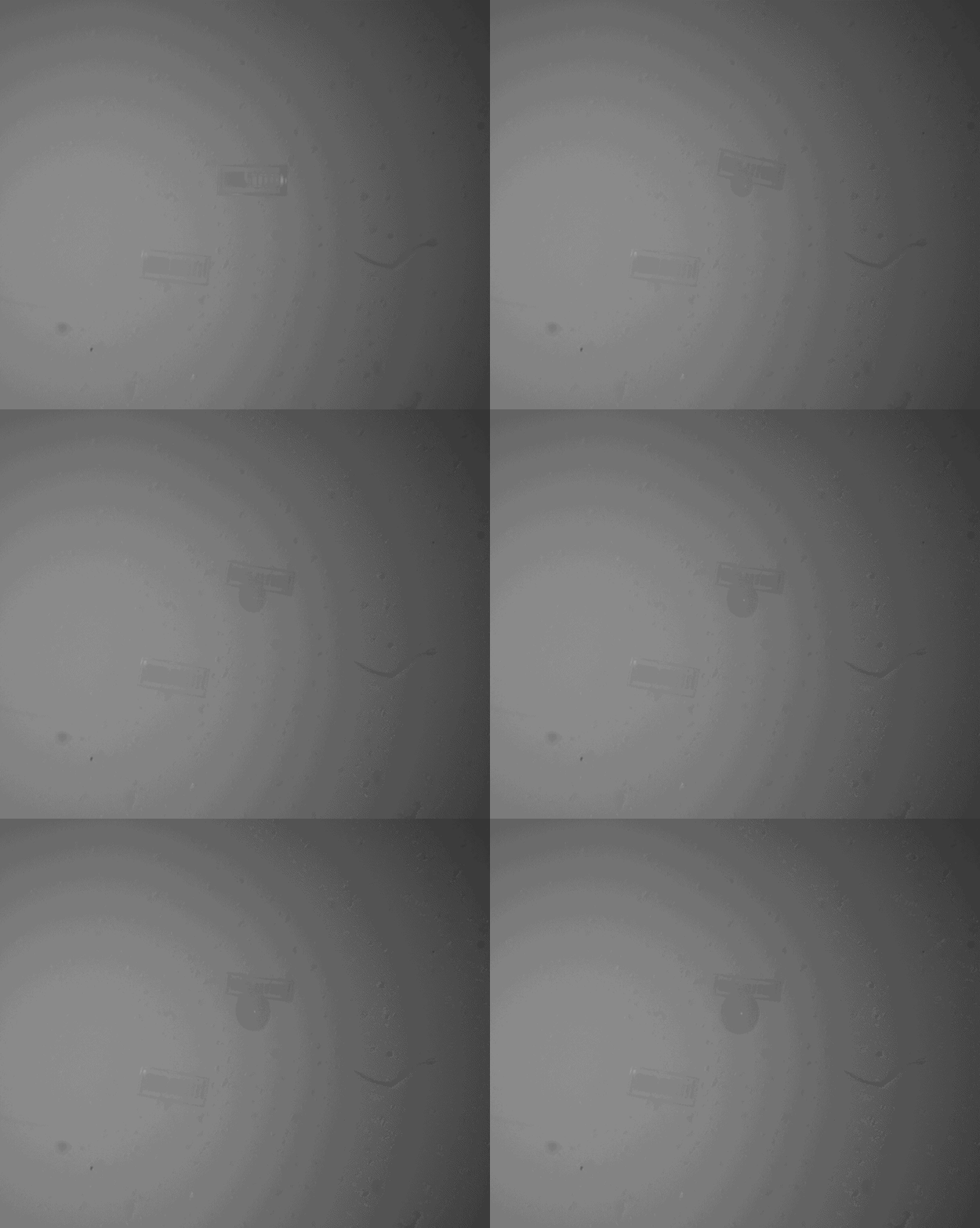
Clockwise: Proofs for bubbling, strong reactions to the Z field, reactions to the X field, plating, and maximum coil temperature.
In my lab work, this often looked like getting a single clean reaction or motion to occur, just enough to say this is real. Once that threshold is crossed, the best questions to ask shift to mapping behavior and failure modes, constraints, and so on. It’s a small sequencing decision, but it turns a vague space into something you can actually build on.